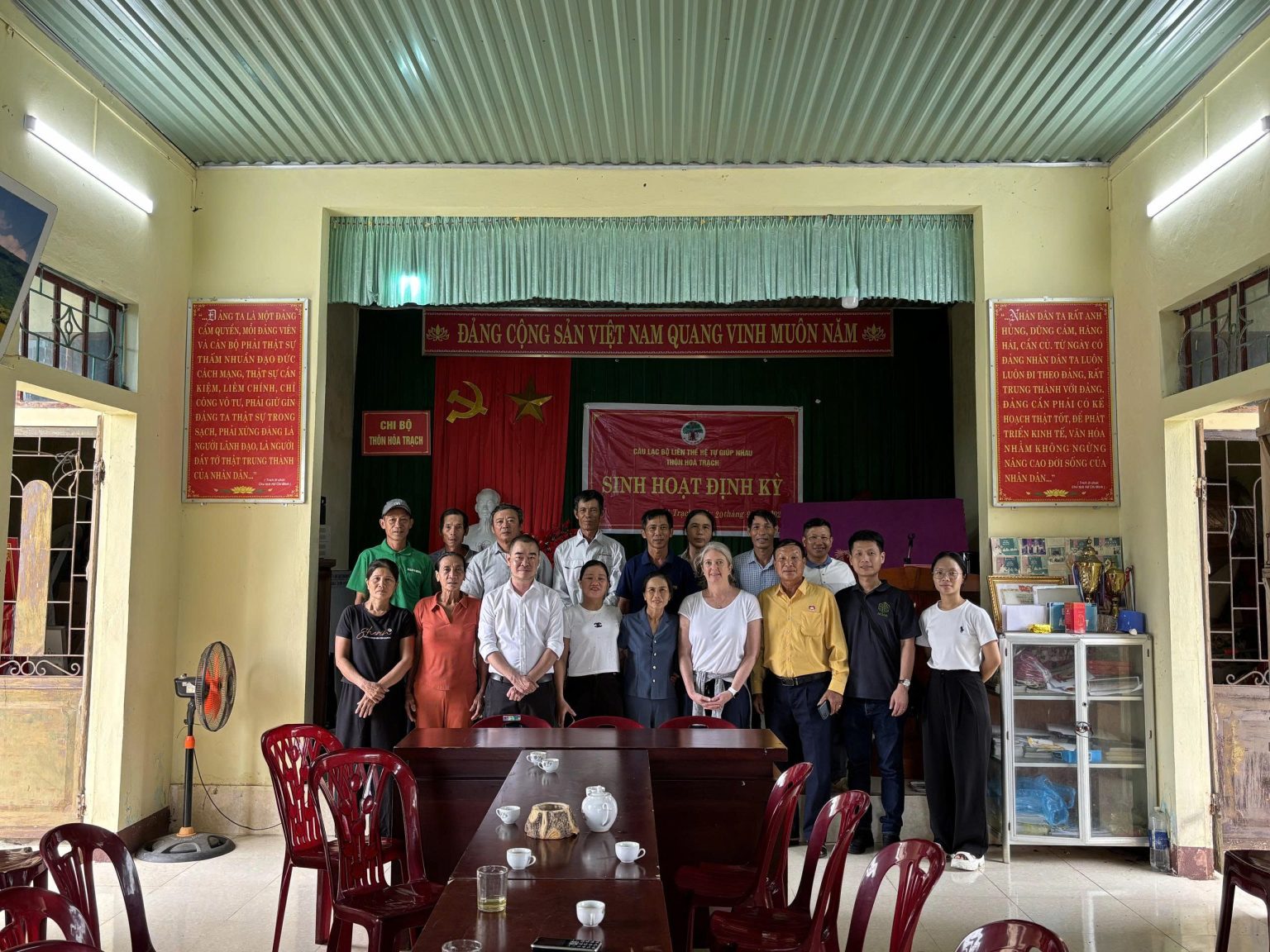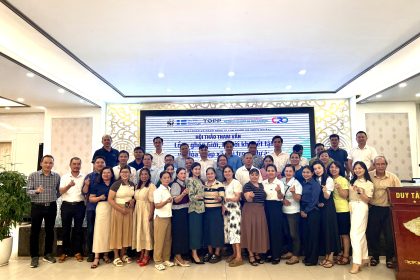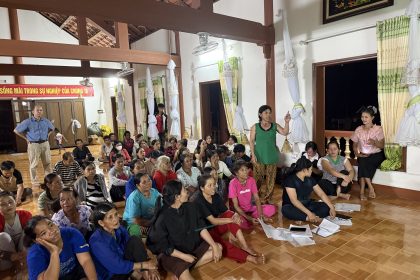

In Vietnam’s beef cattle sector, the majority of farmers operate on a small, fragmented scale, constrained by limited capital, technical capacity, and market information. As a result, production efficiency remains low, risks are high, and farmers hold weak bargaining power against local traders. To address these bottlenecks, under the project “Linking Smallholders’ Production Activities to the Commercial Beef Supply Chain in Vietnam” funded by ACIAR, the Centre for Rural Development in Central Vietnam (CRD) – University of Agriculture and Forestry, Hue University – established the Nam Trach Cattle Fattening Alliance Cooperative Group in Nam Trach Commune, Quang Tri Province. This key initiative brings together beef cattle farming households into a cooperative mechanism, leveraging collective strength to establish direct market linkages.
The cooperative group brings together 20 member households specializing in cattle fattening while producing and supplying roughage feed, primarily VA06 elephant grass and biomass maize. Technically and operationally, this collaborative model facilitates the sharing of good husbandry practices, harmonizes care and feeding protocols, enables seasonal feed planning, and lowers input costs through economies of scale (joint procurement of breeds, supplies, and veterinary services). Built on collaboration and shared standards, this approach overcomes the inherent drawbacks of individual production, enhancing weight-gain productivity and livestock uniformity prior to sale.
From a supply chain perspective, the cooperative group acts as a collector, standardizer, and guarantor:
-
Aggregating output and scheduling sale timelines across households;
-
Standardizing quality metrics (age, weight, body condition, and veterinary hygiene); and
-
Guaranteeing a stable supply for commercial farms, livestock enterprises, and traders within Quang Tri Province.
Particularly under distinct seasonal climate conditions, the “storage-and-season-buffering” mechanism—supported by dedicated areas of VA06 grass and biomass maize—helps mitigate feed fluctuations, maintain steady growth, and reduce the risk of supply disruptions during the dry season.
Socioeconomically, the cooperative group serves as a bridge integrating smallholders into formal value chains. Through collective bargaining and framework agreements, farmers gain access to stable, transparent pricing and delivery terms rather than relying entirely on traditional spot markets. This approach not only improves household income and reduces price volatility risks but also provides clear market signals, encouraging farmers to reinvest in breeds, feed, and technical improvements.
From a sustainable development perspective, the alliance model fosters social capital (trust, collaboration, peer learning) and knowledge capital (extension adoption, biosecurity, waste management) at the community level. Zoning grass and maize raw material areas based on local land capacity ensures rational resource use, reduces pressures from uncoordinated land exploitation, and opens opportunities to apply regenerative agriculture practices (soil cover, forage rotation, and intercropping) to strengthen climate resilience.
Overall, the Nam Trach Cattle Fattening Alliance Cooperative Group demonstrates the effectiveness of a “chain-oriented smallholder organization” approach in the beef sector: converting small-scale production into market strength, standardizing quality across inputs, husbandry, and outputs, building trust with enterprises, and laying the foundation for replication in neighboring livestock clusters. This scientifically grounded and highly practical approach helps smallholders overcome market entry barriers, participate deeper in the value chain, and build an efficient, sustainable future for the beef cattle industry.