
NATURAL RESOURCE MANAGEMENT AND BIODIVERSITY CONSERVATION
Like other ethnic minority communities living in the mountainous forests of Central Vietnam, the Co Tu people in Thuong Lo commune, Nam Dong district ,Thua Thien Hue province have traditionally used indigineous medicinal plants to treat illnesses or using as food. However, currently, several herbal plant species that used to be common in Thuong Lo commune such as Paris polyphylla, Anoectochilus formosanus, Ardisia silvestris, Fibraurea recisa, or Rauvolfia verticillata are increasingly degraded and some species are even facing the risk of extinction. Besides, the knowledge of local people in identifying and using medicinal plants has also gradually faded away over time.
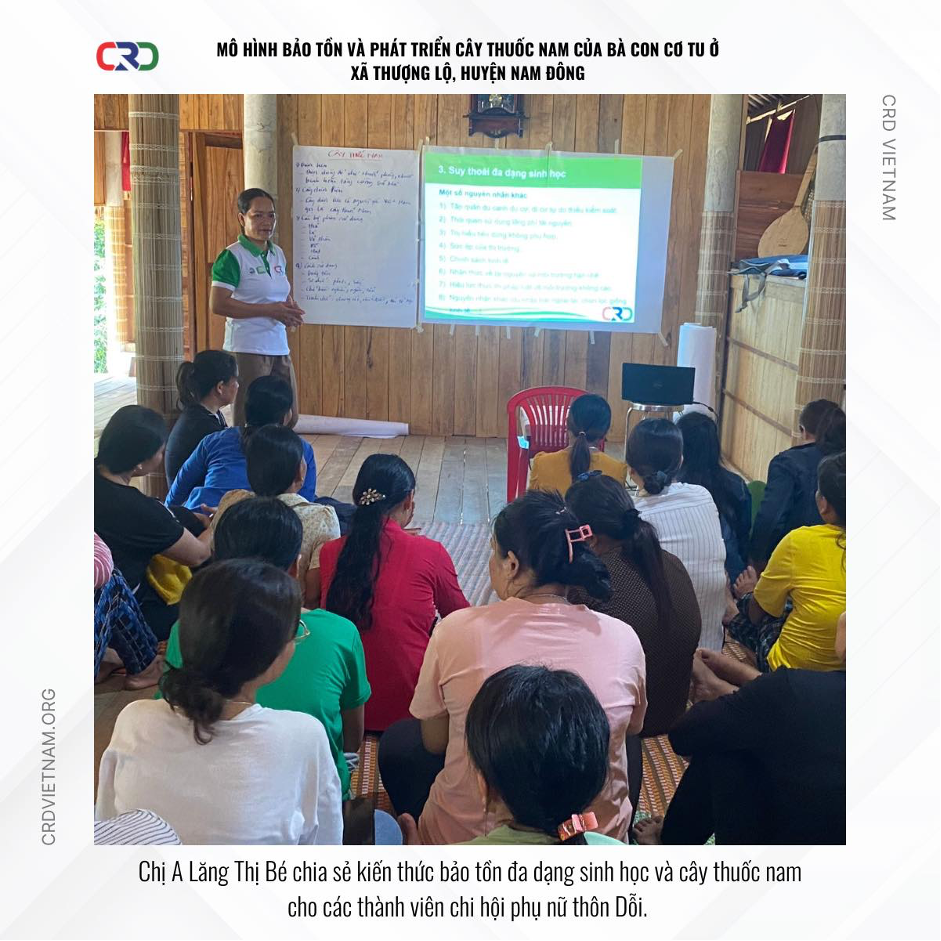
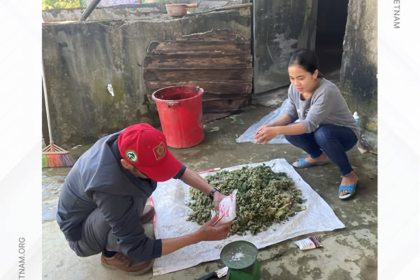
With the support of CRD through the project “Strengthening the participation of ethnic minority communities in the conservation of traditional herbal plant resources”, the Co Tu ethnic people in Thuong Lo commune,have actively participated in activities to preserve indigenous medicinal plants. The local people have successfully propagated and replanted over 450 seedlings of 11 rare and precious traditional herbal plant species in the forest, such as Ardisia silvestris, Fibraurea recisa, etc. In particular, the elderly of the Co Tu people have become “experts” in identifying traditional herbal plants, participated in collecting rare and precious plants for propagation, and directly participated in editing handbooks to pass down to future generations.
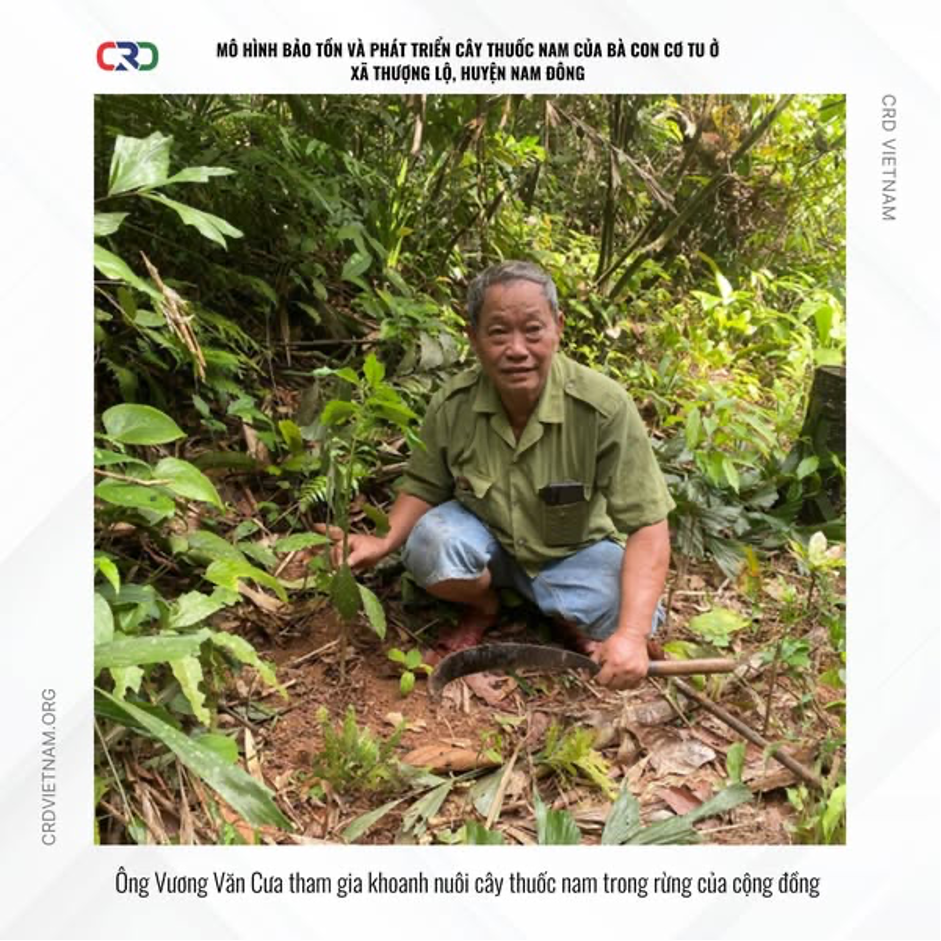
Despite being over 75 years old, Mr. Vuong Van Cua, a community member of Doi village, Thuong Lo commune, Nam Dong district ,Thua Thien Hue province , still actively joins with the villagers in replanting medicinal plants in the forest to preserve the precious remedies of the Co Tu people. Mr. Cua shared, “In the past, every time I went to the forest with my mother, she would show me each precious medicinal plant of the Co Tu people, but gradually there were no books to write or record them down, so now I have forgotten them all. Now with the project’s help, Mr. Ne from Ria Ho village and I, together with the CRD consultant, have re-identified a number of medicinal plants and their uses to rewrite them into a book to pass down to future generations.”
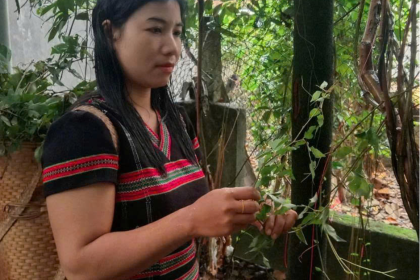
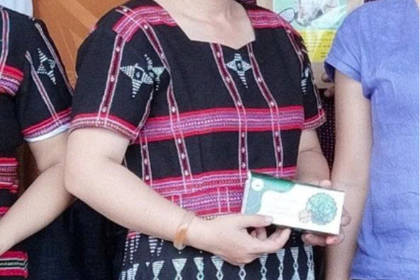
Not only the elderly like Mr. Cua, but Co Tu women also actively participate in the conservation activities such as collecting, replanting medicinal plants into natural forests, and sharing knowledge with other community members in the Co Tu language.
With the active participation of community members, the Co Tu ethnic minority people have not only maintained and promoted rare and precious indigenous medicinal plants in the community forest but also contributed to preserving indigenous knowledge and conserving local biodiversity.