
CLIMATE CHANGE RESPONSE AND DISASTER RISK MANAGEMENT
A Luoi is one of the two mountainous districts in Thua Thien Hue province, with a high percentage of ethnic minority households (76%). With a high poverty rate (over 35% in A Roang, A Luoi district), local livelihoods heavily depend on agricultural cultivation, which in turn generates methane emissions that exacerbate the greenhouse effect. Methane emissions come not only from wet rice cultivation but also in large quantities from the decomposition of organic waste from livestock. However, this source of waste remains untreated and is directly discharged into the environment by local people, leading to wastefulness and environmental pollution.
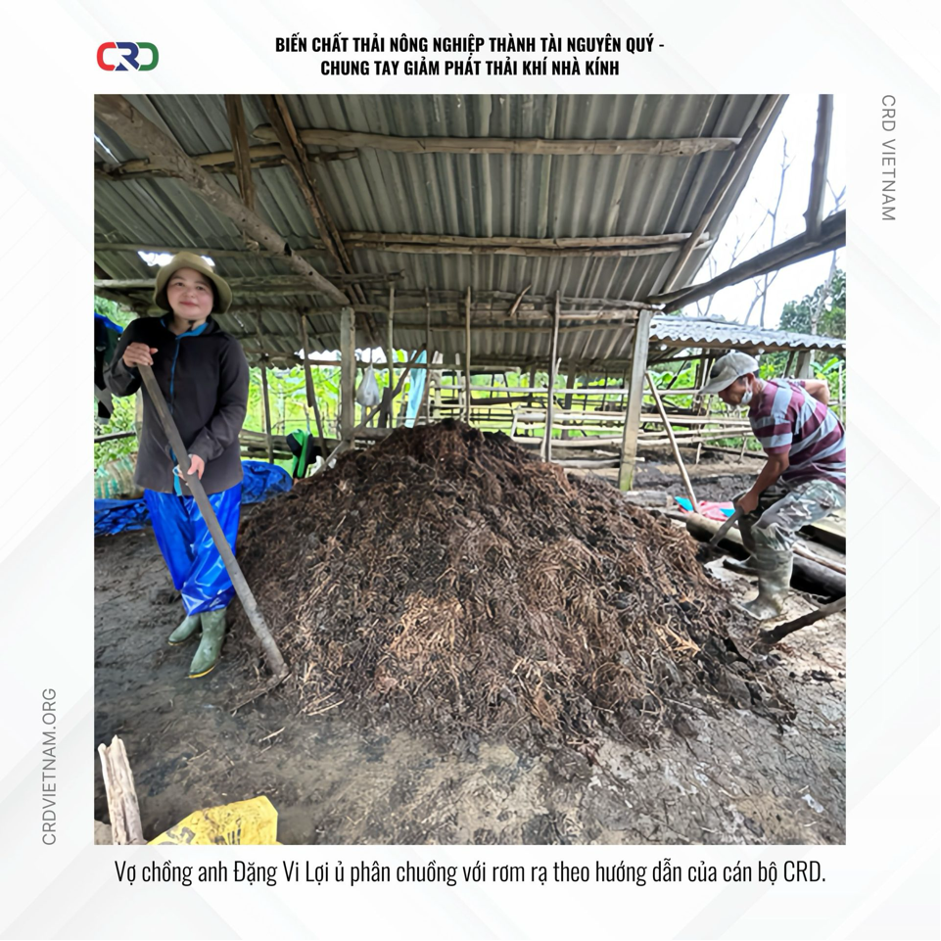
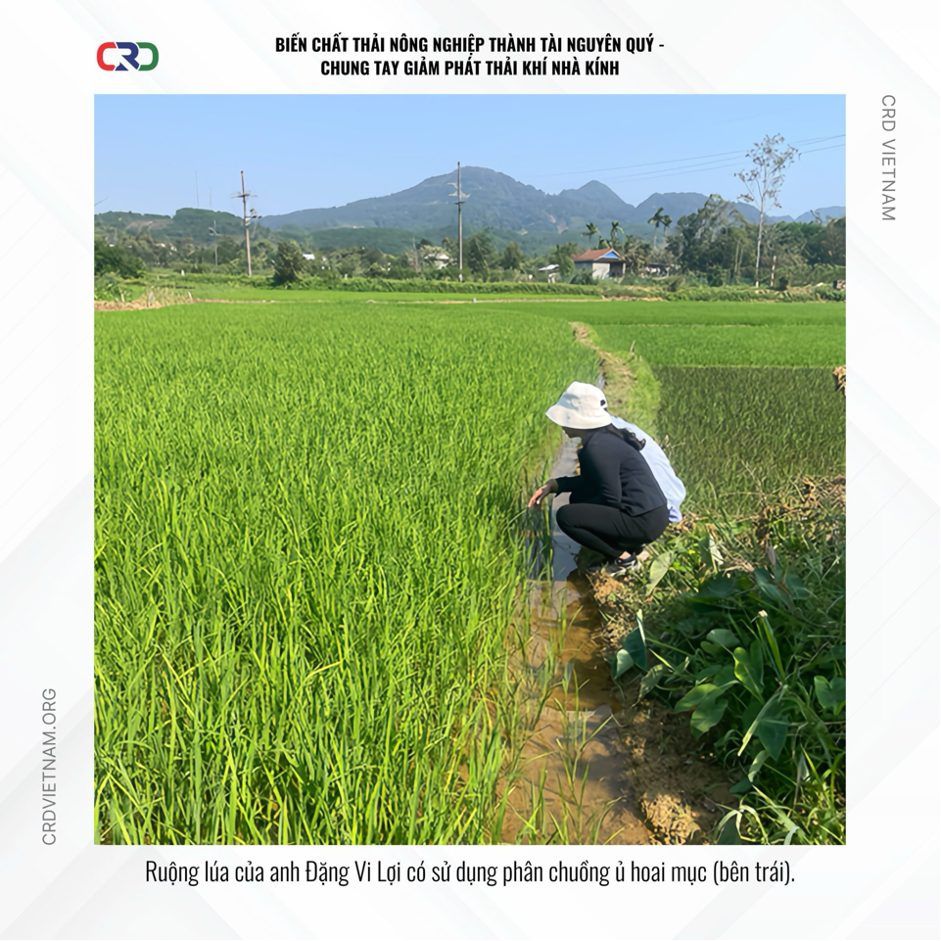
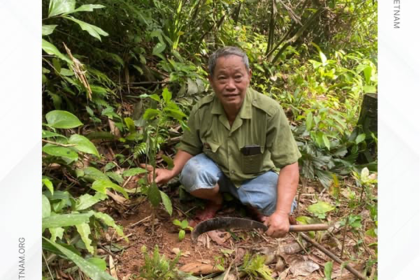
At the end of 2023, the Project “Climate-Smart Agriculture for Ethnic Minorities in Central Vietnam” was implemented by CRD in Hong Thuong and A Roang communes of A Luoi district. The project aims to raise awareness and shift traditional farming practices toward climate-smart agriculture. Mr. Dang Vi Loi’s household is one of the pioneers to successfully apply and utilize straw and cattle manure for composting to fertilize rice crops, aiming to minimize environmental pollution.
“There is an abundant source of buffalo and cow manure, but people did not utilize it for fertilizer, and straw was just burned in the fields, causing environmental pollution. After receiving training from the project, I practiced the technique of well-composted manure, tested it, and applied it as basal fertilizer for my rice field. Up to now, though it is not yet harvest time, the rice plants are growing very well compared to before. Furthermore, the manure composting method is very easy to do,” said Mr. Dang Vi Loi.
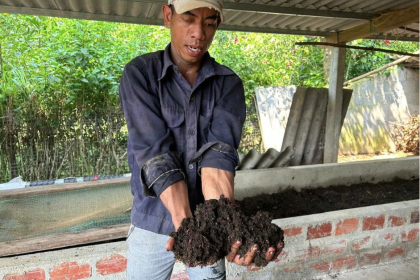
Composting manure with other available agricultural by-products not only improves agricultural economic efficiency but also significantly contributes to reducing greenhouse gas emissions and limiting environmental pollution. With such practical significance, this activity is beginning to be shared and replicated so that more local households can learn about, study, and apply it. The project hopes to gradually bring about changes from the smallest actions to improve smarter agricultural cultivation practices in the context of increasingly unpredictable climate change.