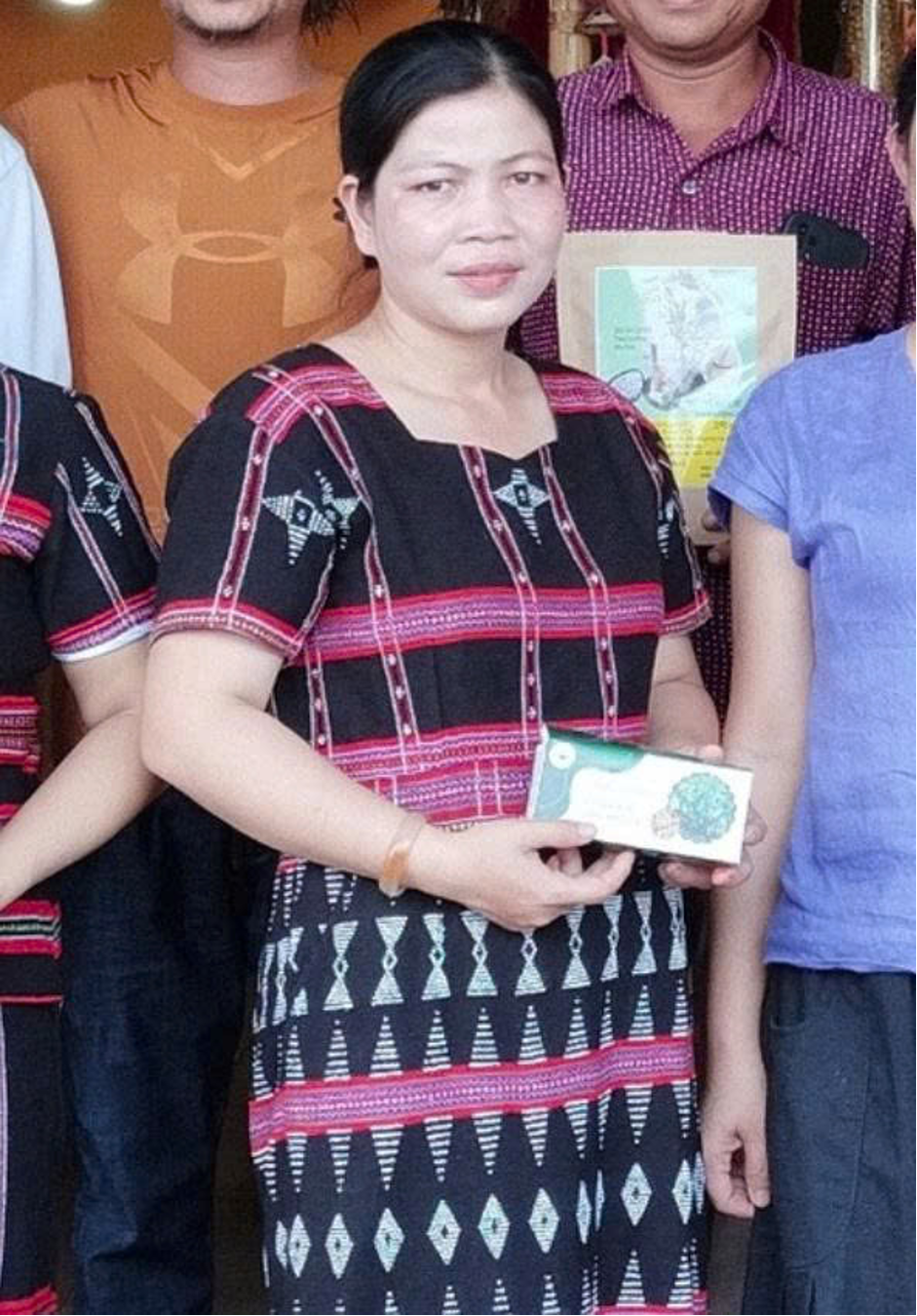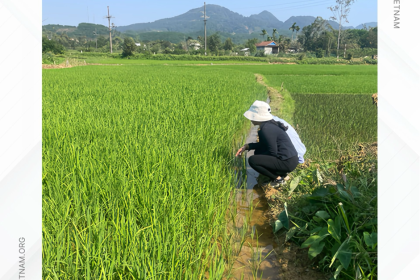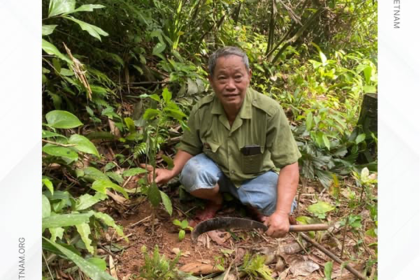

Amidst the lush green forests of Doi Village, Thuong Lo Commune, Nam Dong District, Thua Thien Hue Province, there is a small yet deeply inspiring story about the transformation and advancement of an ethnic minority woman. Ms. Ho Thi O Mai, an active member of the Doi Village forest management household group, has never imagined that from the wild ginger roots growing beneath the forest canopy, she could build a sustainable livelihood for her family.
Initially, when participating in the pilot model of planting ginger under the forest canopy implemented by the project “Strengthening CSOs and CBOs to accelerate on Conservation efforts in the Central Annamites” (LtC Project), she and her husband simply thought it was a way to enrich the forest. However, everything changed when the project not only provided seedlings and fertilizers but also opened up new knowledge for her regarding markets and the added value of non-timber forest products (NTFPs).
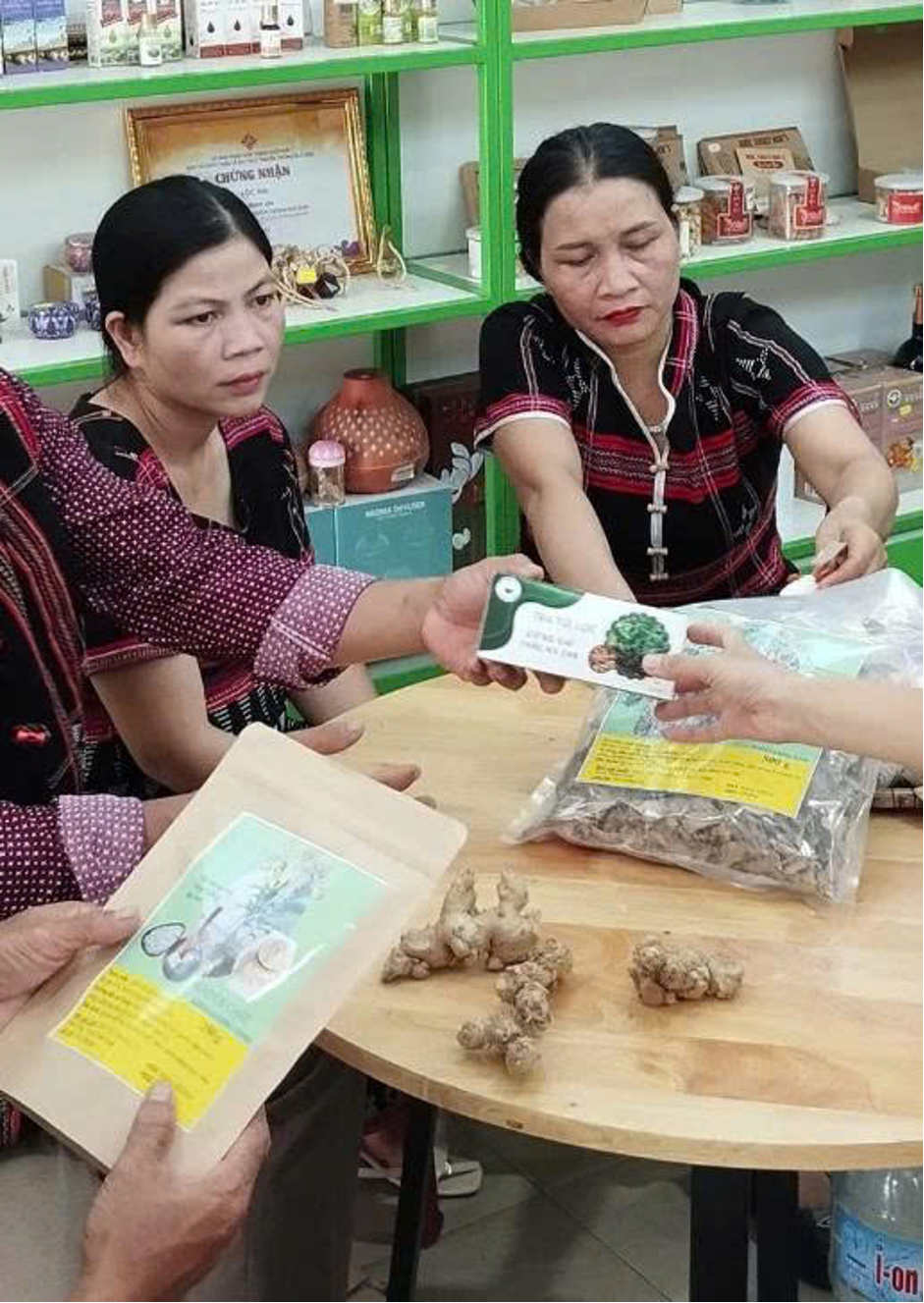
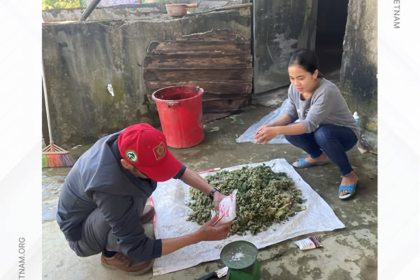
Moving beyond just knowing how to cultivate, Ms. Mai was guided on how to process ginger into ginger powder and ginger tea—products capable of yielding higher economic value. Not stopping there, for the first time in her life, she stepped beyond her village boundaries to participate in a product exhibition showcasing processed products from wild ginger in Hue City. The feeling of being both nervous and proud while personally introducing the products she created made her realize that from a farmer, she had become an entrepreneur.
“Previously, I only thought that growing ginger was to green up the forest, and I never thought about selling the products. Thanks to the project, I have learned how to process ginger powder and ginger tea, understand the market, and confidently introduce my products. Now, I am both contributing to forest protection and earning additional income for my family. This makes me feel very happy and much more confident!” – shared Ms. Mai.
Thanks to the transformations brought by the under-canopy ginger cultivation model, Ms. Mai’s family has not only gained extra income, but she has also become a driving force for many individuals in the village, especially ethnic minority women, to boldly experiment with new approaches. Moving past their initial hesitation, they have begun to believe that they can also take charge of their household economics and transform their lives with their own hands. Her story serves as clear evidence that forest protection and economic development are not separate concepts, but can completely go hand in hand to deliver sustainable outcomes for the community.