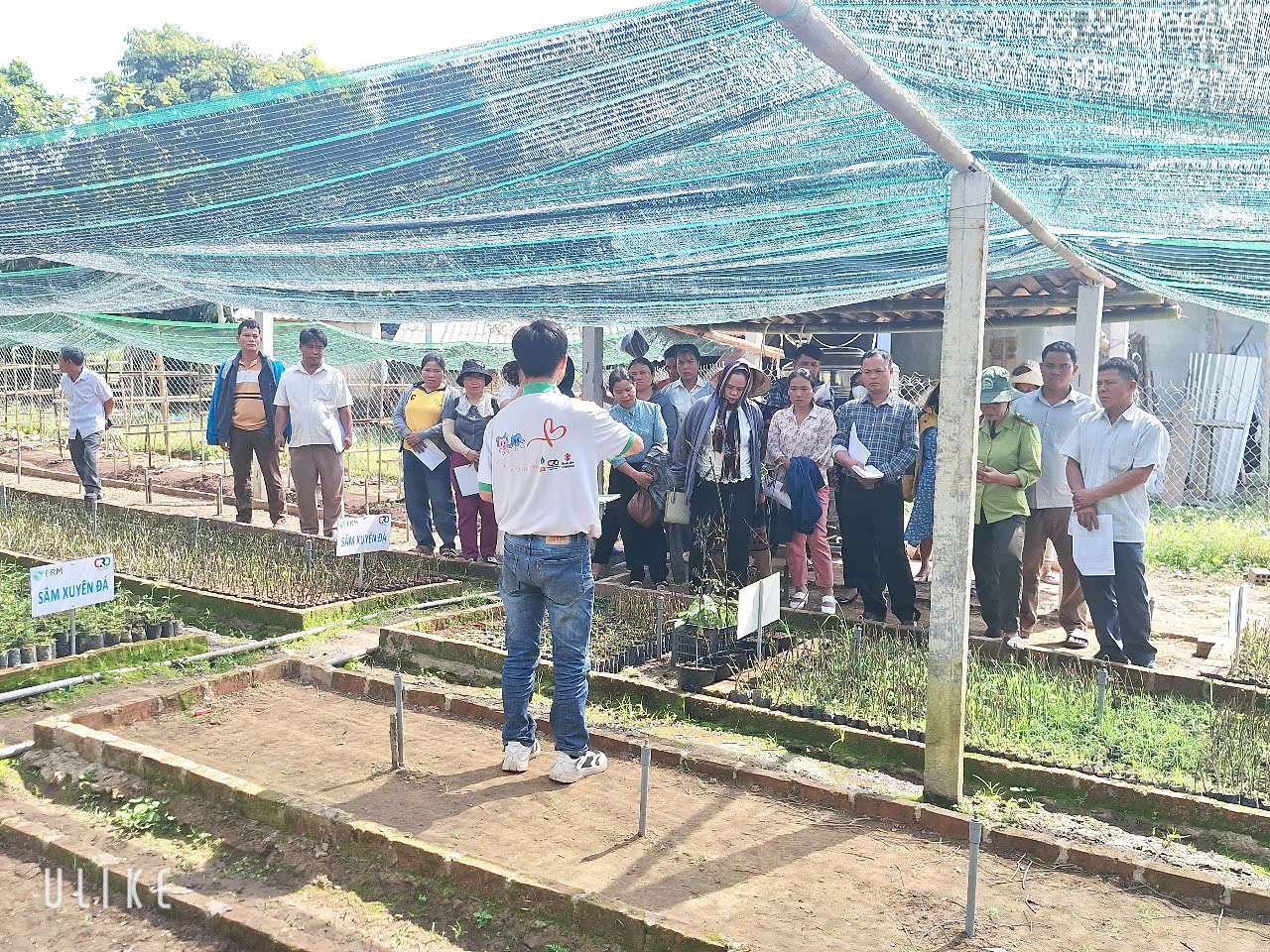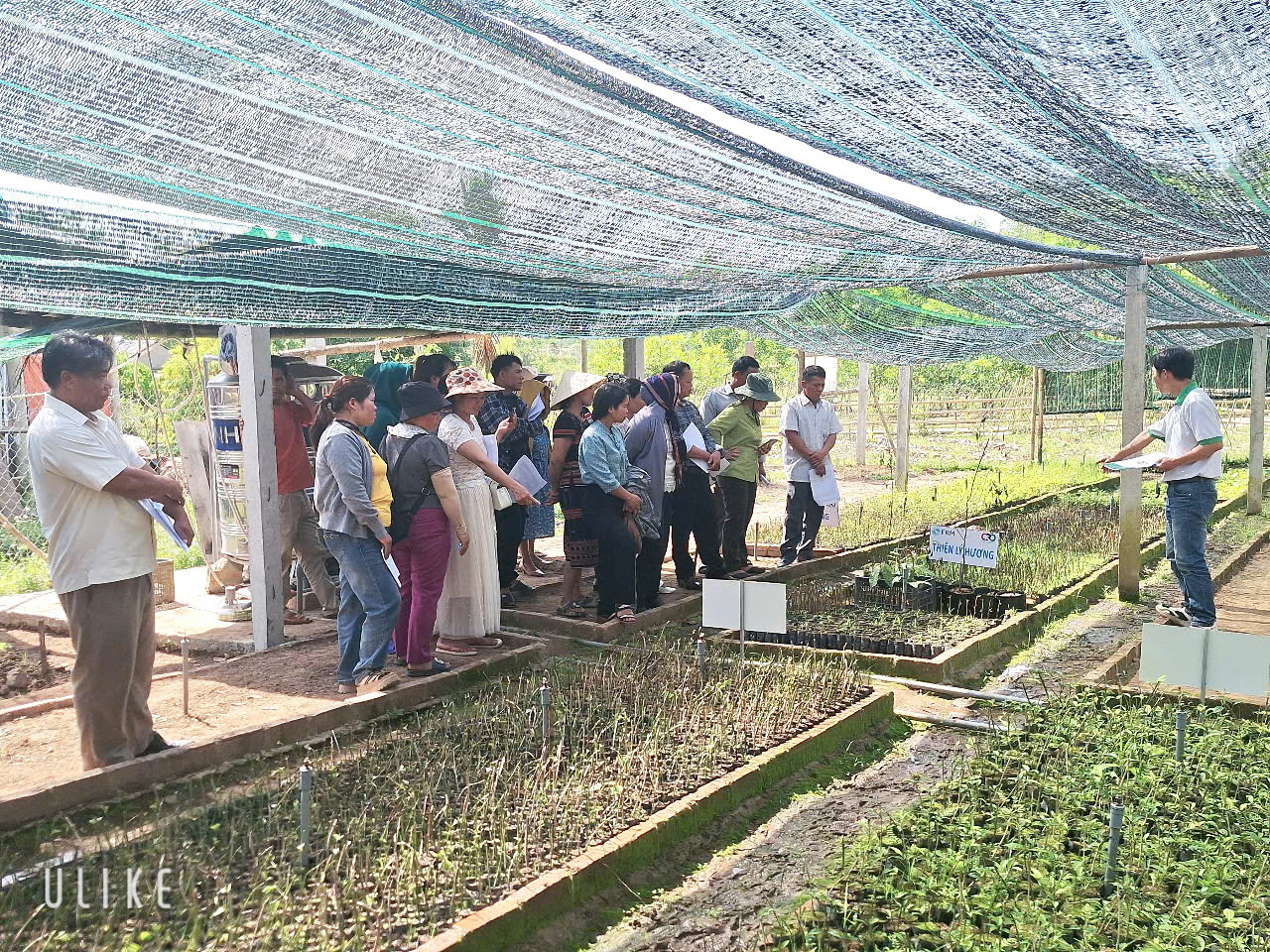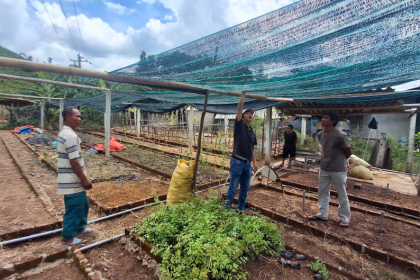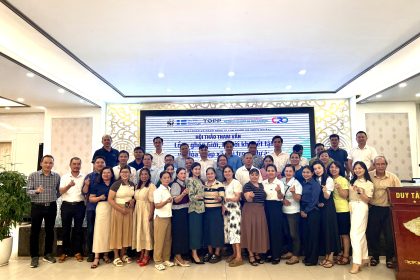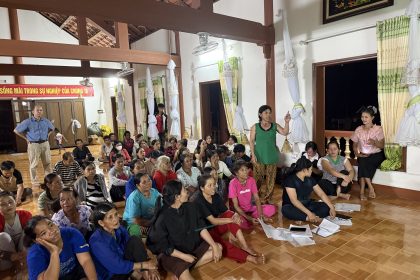

On April 12, 2025, the Centre for Rural Development in Central Vietnam (CRD), University of Agriculture and Forestry, Hue University, organized a field workshop at the medicinal plant nursery in A Tia 1 village, Hong Kim commune, A Luoi district. The event was held within the framework of the project “Promoting the Conservation of Indigenous Medicinal Plants Associated with Livelihood Improvement for Ethnic Minority Women in Mountainous Areas,” funded by the Environmental Resources Management Foundation (ERM Foundation) under the ERM Group.
The key objective of the workshop was to create a forum to share valuable operational experiences among nursery groups, discuss technical considerations during the propagation of various medicinal species, and collectively devise practical solutions to enhance seedling production efficiency in the future.
Ms. Ho Thi Giang, Head of the A Tia 1 Community Nursery Group, delivered a detailed presentation on the group’s journey of establishment and progress. Formed in April 2024 with support from CRD, the group initially comprised 15 enthusiastic members. Following initial challenges and organizational adjustments, the group currently maintains active operations with 10 members under Ms. Giang’s leadership. The group’s structure includes a group leader, deputy leader, an accountant-cum-secretary, and a treasurer.
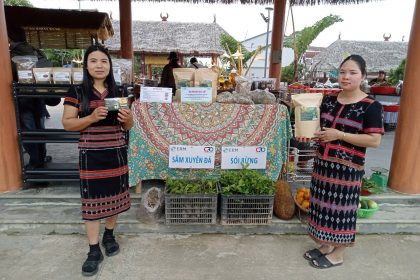
With an initial investment of approximately VND 70 million from the project, the group constructed a well-equipped 500 m² nursery, featuring essential supplies and equipment such as bricks, B40 mesh fencing, shade netting, irrigation systems, and agricultural tools. The project also conducted intensive training sessions on seedling propagation techniques and business planning, equipping members with foundational knowledge and skills to manage seedling production and commercialization independently. Moving forward, the group agreed on a production plan specifying target quantities for medicinal species including Myrica rubra (Sâm xuyên đá), Sarcandra glabra (Sói rừng), Homalomena occulta (Thiên niên kiện), wild tea (Chè dây), Tacca chantrieri (Râu hùm), and Telosma cordata (Thiên lý hương).
Despite numerous hurdles, the group’s dedication—combined with guidance from project officers—has yielded relatively high survival rates across multiple medicinal species. Notably, on March 28, 2025, the group successfully dispatched 1,200 Sarcandra glabra and Myrica rubra seedlings to support project planting activities in community forests across Hong Kim commune.
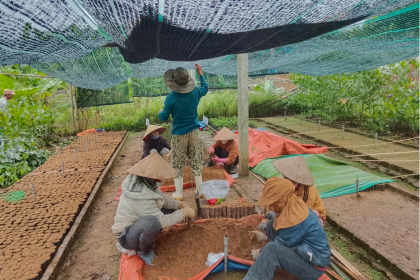
During the experience-sharing session, Ms. Giang detailed the propagation techniques taught and applied, including stem cutting, root/tuber propagation, soil mixing methods, rooting hormone application, cutting preparation, transplanting, and seedling care. However, she candidly highlighted ongoing challenges: sourcing raw material (particularly identifying and harvesting seeds/cuttings from natural forests), refining stem-cutting techniques for delicate species like Myrica rubra, managing uneven member participation due to personal work schedules, and coping with unfavorable weather conditions. The group expressed a strong desire to further learn seed propagation techniques and improve survival rates for root/tuber and stem-cut species such as Tacca chantrieri and Telosma cordata.
The discussion session was lively and constructive, focusing on practical solutions to address these challenges. Local participants exchanged ideas on securing stable, high-quality seedling sources as well as optimizing nursery care practices under the technical guidance of CRD project staff.
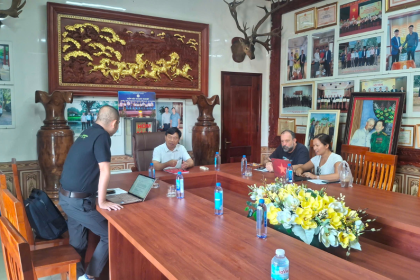
Ms. Ho Thi Nga, Vice Chairwoman of the Hong Kim People’s Committee, highly commended the initial achievements of the nursery group and emphasized the importance of peer-to-peer learning among local community nurseries. The event concluded successfully, building a strong foundation for the sustainable development of community-based medicinal nurseries, contributing to the conservation of precious indigenous medicinal plant genetics, and improving livelihoods for local communities.